
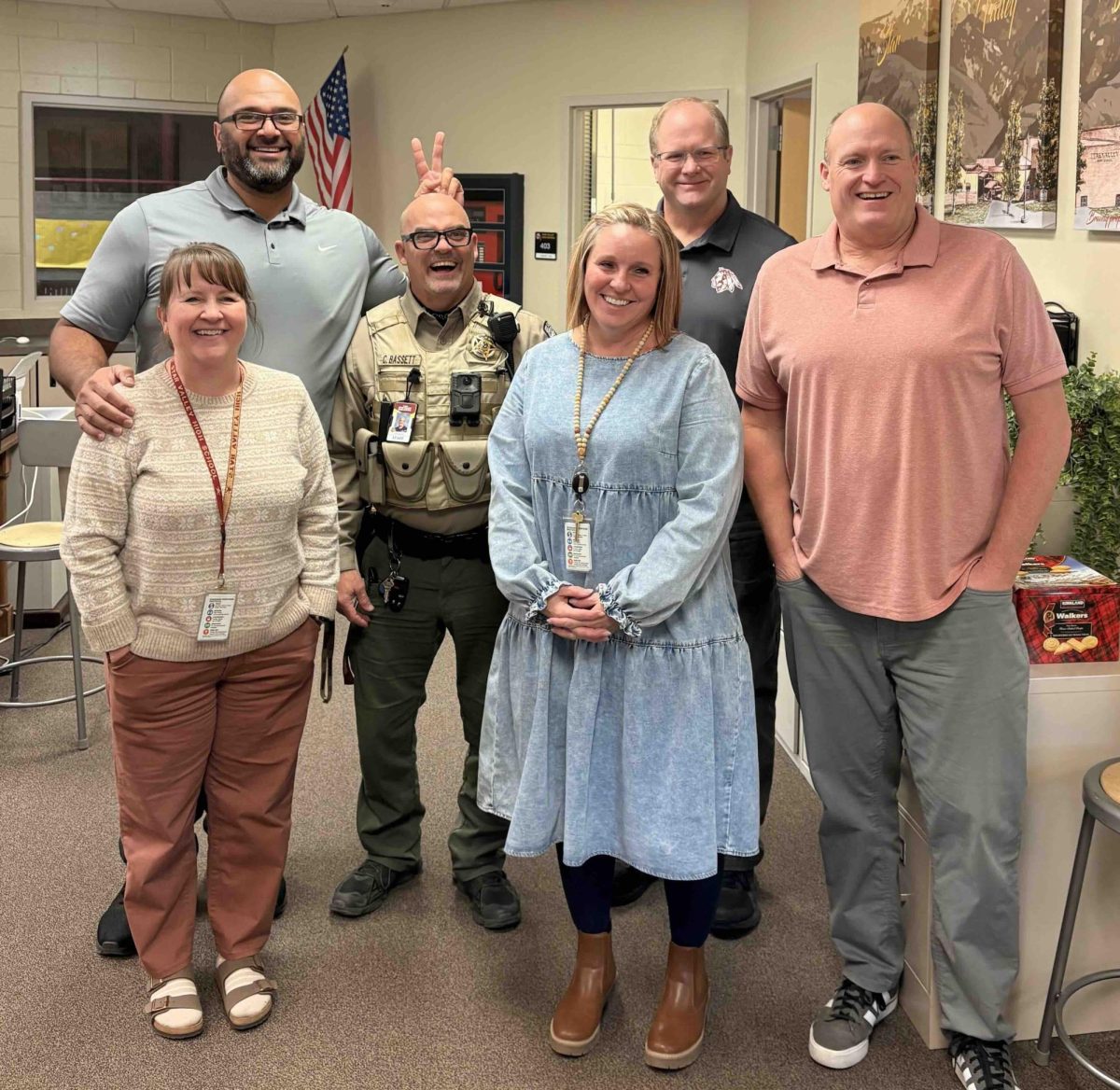









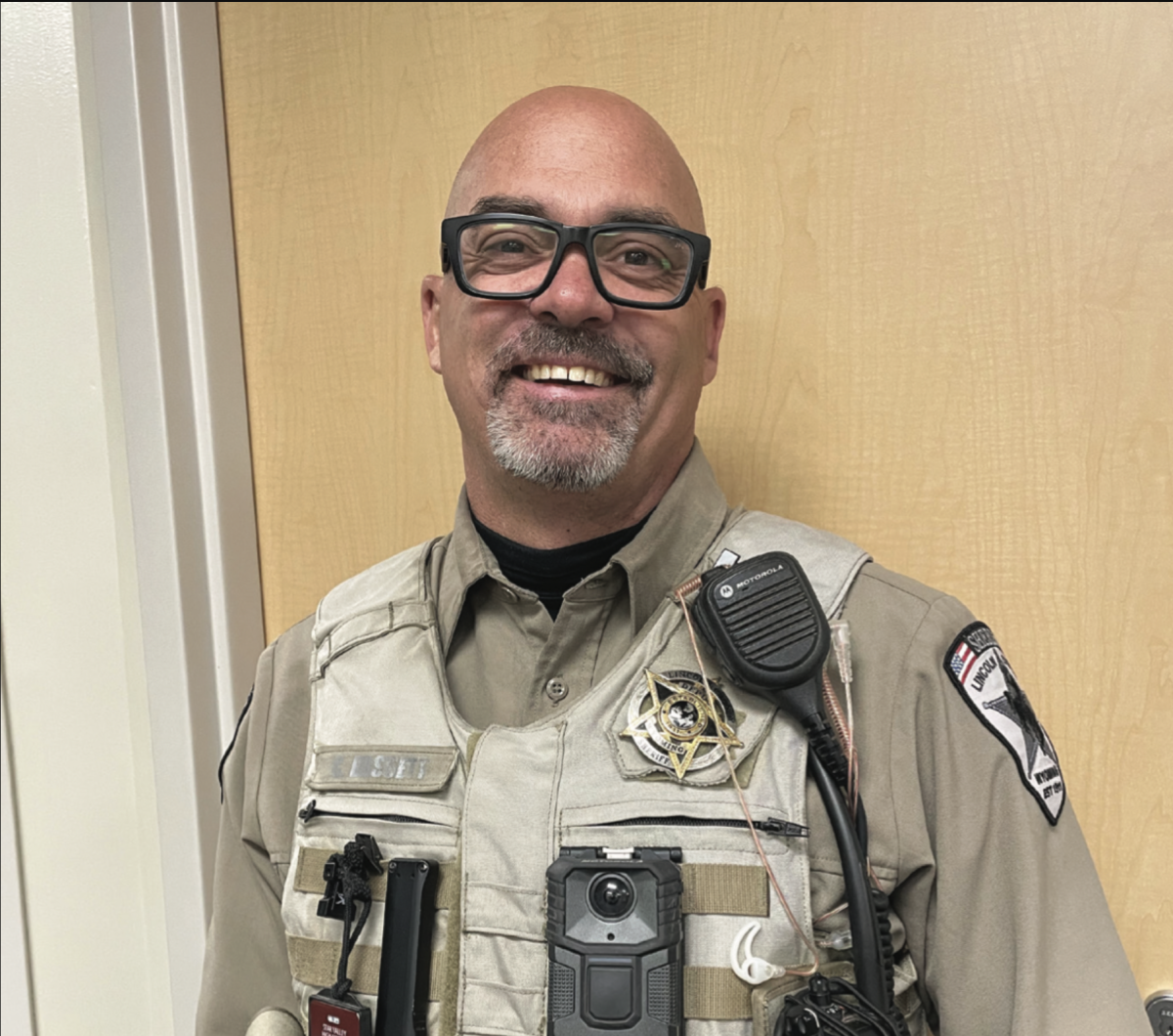
If you walk through the school on any given weekday, you’ll probably spot School Resource Officer Corey Bassett long before the bell rings. He might be greeting students near the main entrance, checking in with staff, or preparing to visit one of the district’s other schools. His schedule changes daily, but his mission stays the same: make school a safer, calmer place for everyone who walks through the doors.
Bassett has deep roots in Star Valley. After leaving briefly for education and training in criminal justice, he returned home and built a long career with the Lincoln County Sheriff’s Department. A few years ago, he transitioned into the School Resource Officer role, a position that takes him into every school in the district throughout the week.
“When you’re on patrol, a lot of what you deal with is more negative,” Bassett said. “You’re usually seeing people at the worst moments of their lives. Being a resource officer is a change of pace. I get to see more positive things here and feel like I can make more of a difference.”
While many students know him as the uniformed adult they pass in the hallway, Bassett’s work extends far beyond walking the campus. His mornings often begin with reviewing safety plans, meeting with administrators, or preparing to teach lessons about decision-making or safety. Some days involve supporting students through tough situations; other days are filled with small, positive interactions that shape the school environment more than people realize.
“No day is ever the same,” Bassett said. “I work with different schools, so it could be anything—from being present in the halls or parking lots, to helping teach a class, spending time with elementary kids at recess, or going to games. It really covers a lot.”
Being an SRO also means blending several roles at once. Bassett may shift from listening to a student, to answering a safety question from a teacher, to heading across town for a meeting—sometimes all within an hour. He works to make sure that students feel comfortable approaching him, whether it’s for help, advice, or just a quick conversation.
“Honesty is a big part of building trust,” Bassett said. “As kids get older, there’s a lot being thrown at them. Mistakes happen, and decisions aren’t always the best. I try to put myself in their perspective at that age and treat them with understanding.”
Even though the job comes with challenges, especially when students face personal or behavioral struggles, Bassett views these moments as opportunities to guide them toward better choices. He sees the value in being a consistent, steady adult in their lives, especially during times when small decisions can have big consequences.
“The hardest part is when things involving kids come from outside the school—home life or other circumstances—and then filter into the building,” Bassett said. “Sometimes I have to investigate things that are negative or harmful, and that’s tough, especially when kids are involved.”
Bassett’s responsibilities continue after the final bell rings. He often attends games, performances, and evening events, keeping an eye out for safety concerns while also supporting students in their activities. He says seeing students outside the classroom helps him understand them more fully and strengthens the community overall.
“My role is mainly just being a presence,” he said. “I want the public, the school, and administration to know I’m here, and hopefully that presence helps deter anything negative.”
As someone who grew up in the same community he now serves, Bassett takes pride in giving back to the district that shaped him. The relationships he builds—with staff, with families, and especially with the students—are central to why he feels his work matters.
“It means a lot to serve where I grew up,” Bassett said. “The people I grew up with now have kids coming through these schools. I understand where a lot of these students come from, and I loved growing up here. If I can help give them that same kind of experience, that really matters to me.”
Walk through the halls long enough, and you’ll see how familiar he is to the students. Many greet him easily, some stop him with stories from their day, and younger children often react with excitement when they see him in their schools. Those interactions highlight what Bassett considers the heart of his work: creating a place where students feel seen, supported, and safe.
“I hope students remember that I’m not as serious as I might look,” he said with a smile.